How Roofing Companies Use AI Receptionists to Win Storm Season
Key Takeaways
See your AI receptionist answer your line in 10 minutes
Free live demo. No credit card. See exactly how it handles your calls.
Storm Season Is a 72-Hour Sprint, Not a Marathon
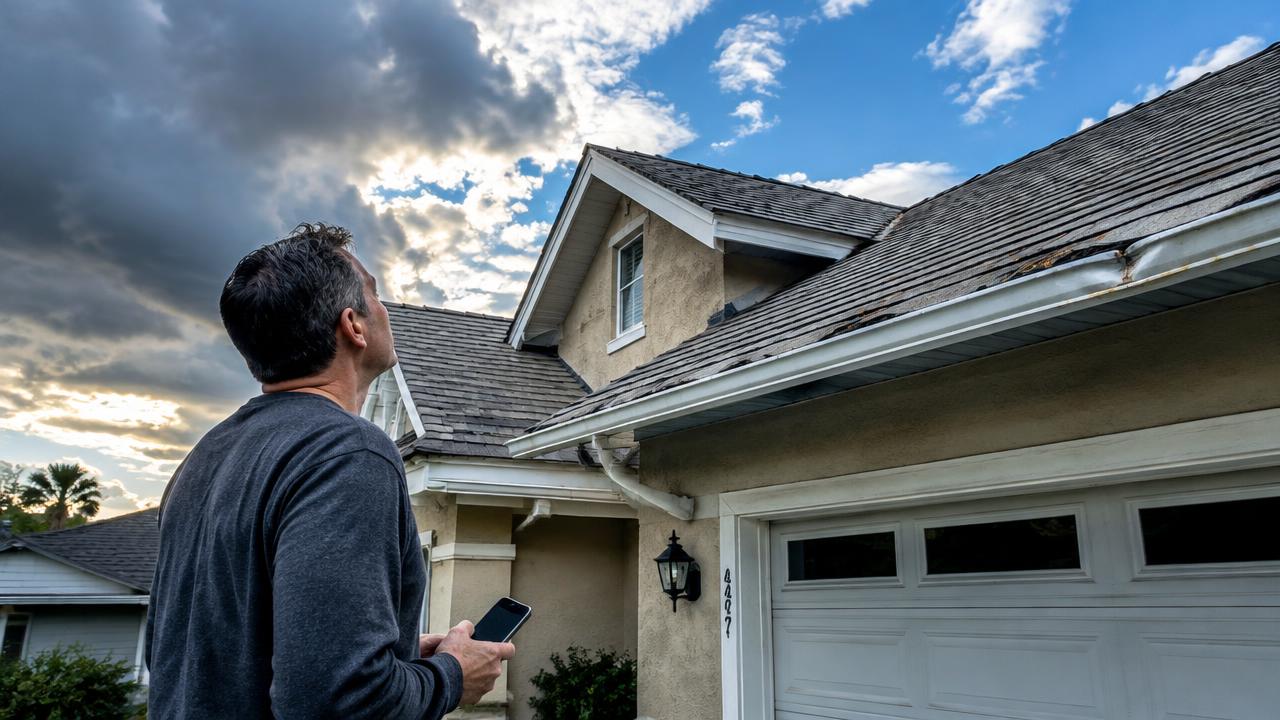
A hailstorm rolls through a neighborhood on a Tuesday afternoon. By evening, homeowners are standing in driveways looking at dented gutters and dimpled shingles. By that night, they're already on their phones searching for a roofer. This is exactly the kind of moment that separates roofing companies that thrive from ones that quietly watch the best jobs of the year slip away, and it's exactly why ai receptionist in California searches spike right alongside the storm itself. A missed call during this window isn't a minor inconvenience it's a fully insured, high-value roof replacement walking straight to whichever competitor picked up the phone first.
Roofing has one of the most predictable demand spikes of any trade, and yet most companies still get caught flat-footed every single time one hits. Knowing the surge is coming doesn't help much if the phone system underneath it can't actually handle the volume.
The frustrating part is how avoidable this is. Storm season isn't a surprise every roofing company knows it's coming, generally knows which months carry the highest risk, and has almost certainly lived through the scramble before. Yet year after year, the same pattern repeats: a storm hits, the phones light up, and by the time anyone thinks to bring in extra help answering calls, the highest-value window has already closed.
Why Roofing Companies Get Overwhelmed So Fast
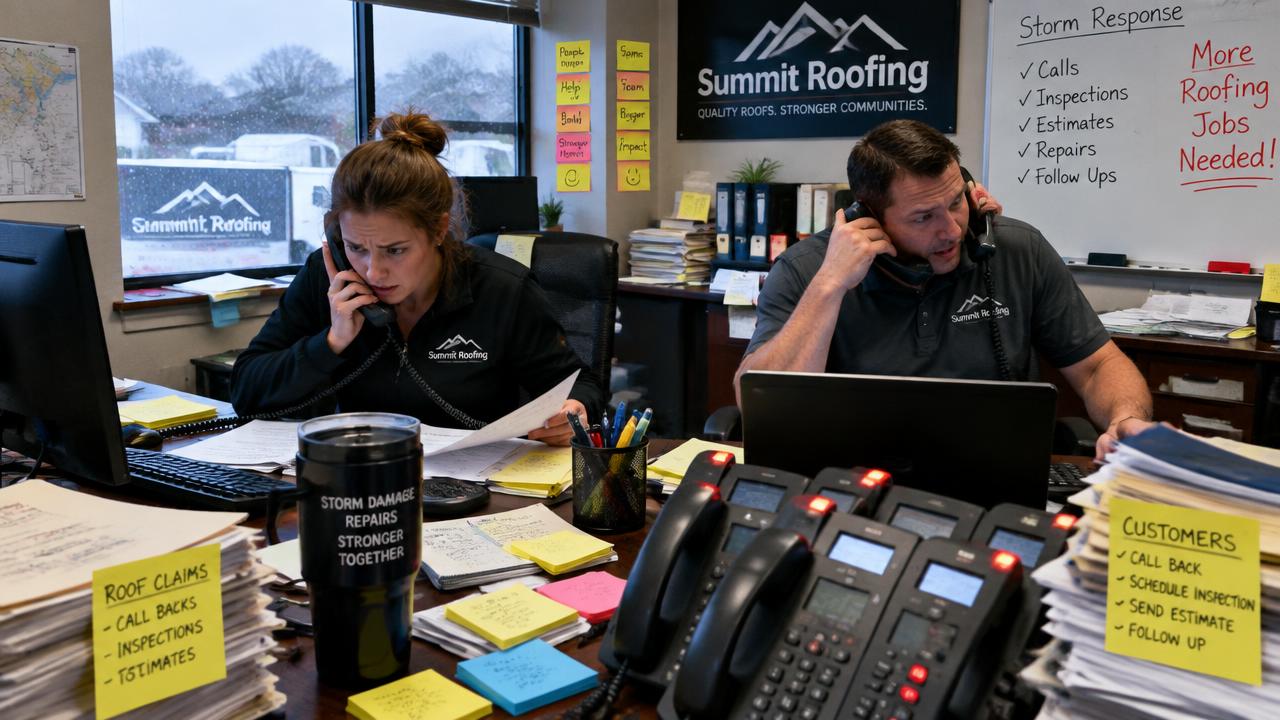
The scale of a storm surge is genuinely difficult to plan for with a traditional office setup. Industry data on contractor storm lead surges shows that a roofing company handling 5 to 10 calls on a normal day can receive 50 to 100 or more within hours of a single storm event a spike of 500% to 1,000% in call volume almost overnight. Most roofing companies simply aren't staffed for that kind of surge; a large share operate with just one or two office employees handling phones during a normal 40-hour week, with no dedicated dispatcher at all. When that skeleton crew suddenly faces ten times the usual call volume, something has to give, and it's almost always the calls that go unanswered.
It's worth picturing what that actually looks like from inside the office. Two people, phones ringing constantly, one caller on hold while a second line rings, a third caller who already hung up before anyone could get to them. Even the most capable office staff physically cannot have more than one conversation at a time, and every minute spent on one caller is a minute three other callers spend listening to hold music or a busy signal before giving up and dialing the next roofer on their list.
| Day Type | Typical Call Volume |
|---|---|
| Normal business day | 5–10 calls (varies by company size) |
| First 24 hours after a major hailstorm | 50–100+ calls, a 500–1,000% spike |
The 72-Hour Window That Decides Who Wins the Job
This surge isn't just intense it's also brief, which is exactly what makes it so unforgiving. Research on post-storm roofing lead behavior found that within 72 hours of a major storm, roughly 80% of homeowners who will eventually file a claim have already chosen their contractor, while Google searches for “roof repair” and “roofing contractor near me” spike 400% to 800% in just the first 48 hours before dropping sharply again within a week. Homeowners calling during this window are typically contacting two or three roofers within the first day and making a hiring decision within three days whoever answers first and sounds credible usually wins the inspection.
| Timeframe After Storm | What's Happening |
|---|---|
| 0–48 hours | Search volume for roofing contractors spikes 400–800% |
| 0–72 hours | About 80% of eventual customers have already picked a contractor |
| 1–2 weeks later | Search volume falls back to roughly baseline levels |
What an AI Receptionist Actually Does During a Surge
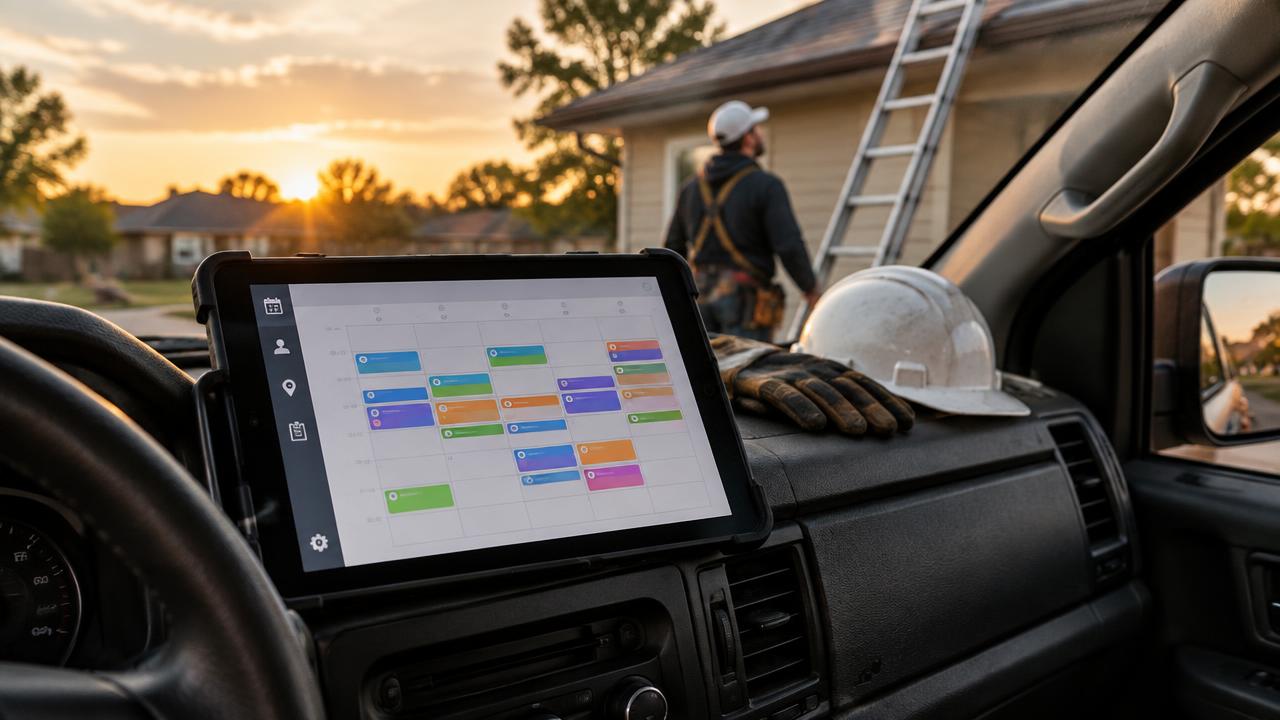
An AI receptionist built for roofing handles unlimited simultaneous calls, meaning it doesn't matter whether one homeowner calls or fifty call within the same ten minutes after a hailstorm every single one gets answered instantly rather than joining a hold queue or hitting voicemail. It asks about damage type, roof age, insurance status, and urgency, gathering exactly the information a crew needs before ever stepping onto a ladder. It books qualified leads directly for a roof inspection on the company's calendar, skipping the callback delay that gives a homeowner time to call the next name on their list. And it collects policy details up front, so the team arrives at the inspection already prepared for the insurance conversation rather than starting cold.
| Capability | What It Solves |
|---|---|
| Unlimited simultaneous call answering | No caller ever hits a busy signal or hold queue during a surge |
| Damage and urgency qualification | Crews arrive prepared instead of gathering basic details on-site |
| Direct inspection booking | Removes the callback gap where a homeowner calls a competitor instead |
| Insurance information capture | Sets up the claims conversation before the inspection even happens |
Not Just Storm Season: Year-Round Lead Capture
Storm season gets the most attention, but it isn't the only time roofing leads come in. Homeowners research roof replacements year-round evenings, weekends, holidays, and every other time an office typically isn't staffed. A roof that's simply aging out, or a slow leak that's been ignored for months, doesn't wait for business hours to finally get addressed either. An AI receptionist covers those calls with the same instant response it gives during a storm surge, which means the same system solving the dramatic once-or-twice-a-year spike is quietly capturing steady, everyday leads the other 362 days of the year too.
This year-round coverage often ends up being the more consistent revenue driver of the two, even though storm season gets the dramatic headlines. A handful of major storm events might happen in a given year, but evening and weekend calls happen every single week, all year long. A system built to catch the storm surge is, almost as a side effect, also catching all of that quieter, steady demand that a traditional 9-to-5 office structure was never built to answer in the first place.
Results Roofing Companies See
The pattern holds up consistently once a proper system is actually in place. Roofing companies running an AI receptionist typically report significantly more inspections booked during storm season specifically, effectively zero missed calls even during a ten-times call surge, and a meaningfully higher close rate driven by leads arriving pre-qualified rather than vague.
| Metric | Typical Result |
|---|---|
| Inspections booked during storm season | Meaningful increase from capturing the full surge |
| Missed calls during a major volume spike | Effectively eliminated, even at 10x normal volume |
| Close rate | Improves when leads arrive already qualified on damage and insurance status |
Being Ready Before the Next Storm Hits
Storm season rewards whichever roofing company is actually prepared for the surge before it arrives, not the one scrambling to hire temporary phone staff after the fact. Willix AI builds AI receptionist systems specifically configured around how roofing companies operate qualifying damage and insurance details, booking inspections directly, and scaling instantly to handle unlimited simultaneous calls so the next storm becomes a growth opportunity instead of a scramble.
Preparation here is genuinely simple compared to most operational upgrades a roofing company might consider. There's no need to hire and train seasonal phone staff, no need to guess how many temporary employees a given storm might require, and no risk of the system being overwhelmed the one time it matters most. It's ready before the first call comes in, whether that's fifty calls in an hour after a hailstorm or one call on a quiet Sunday evening.
Frequently Asked Questions
Why do roofing companies get so many calls right after a storm?
A significant hailstorm or wind event creates urgent, non-discretionary demand across an entire affected area at once, since homeowners want their roof assessed before more weather hits and know that contractors get booked quickly after a storm. This compressed demand can spike call volume by 500% to 1,000% within the first 24 hours.
How many roofing companies does a homeowner typically call after storm damage?
Most homeowners contact two or three roofing contractors within the first day after noticing storm damage, then make a hiring decision within about 72 hours. Whichever contractor answers first and sounds credible and prepared usually wins the inspection appointment.
Can an AI receptionist really handle multiple calls at the same time during a storm surge?
Yes. Unlike a traditional phone line or a small office staff, an AI receptionist can handle unlimited simultaneous calls, so a sudden surge of fifty calls within an hour after a hailstorm gets the same instant, individual attention as a single call on a quiet Tuesday.
Does an AI receptionist only help during storm season, or year-round too?
It helps year-round. While storm season produces the most dramatic call spikes, homeowners research and call about roof replacements and repairs throughout the year, often during evenings, weekends, and holidays when an office typically isn't staffed. The same instant-response system that manages a storm surge also captures those everyday leads the rest of the year.
Ready to turn missed calls into booked jobs?
Talk with Willix AI about an AI-powered marketing system built for your business.
Ready to stop losing leads to voicemail?
Book a free 15-minute demo and watch your AI receptionist answer a live call from your business.
Recommended for Roofing
People also ask on Reddit about ai receptionist
- •ai receptionist for small business
- •ai phone answering service
- •missed call text back
- •24/7 virtual receptionist
- •ai answering service vs human
- •ai receptionist cost
How much does an AI receptionist cost for a small business?
Most small-business AI receptionists run $97–$497/month depending on call volume, integrations, and after-hours coverage. A single recovered booking usually covers the month.
Can an AI receptionist actually book appointments?
Yes, a properly configured AI receptionist answers in under two rings, qualifies the caller, checks your calendar, books the slot, and sends an SMS confirmation without a human in the loop.
What happens to missed calls when I'm on the job?
The AI picks up, captures the lead, texts the caller a booking link, and notifies you in real time, recovering the 60%+ of missed calls that would never call back.
Grab the free AI Readiness Checklist
Score your business in 5 minutes, see exactly where you're leaking leads and the highest-ROI fixes to deploy this week.